Heart attacks: occurrence, causes, and risk
Cardiovascular diseases are the leading cause of death worldwide: around 47% – almost every second death! – are due to a stroke or heart attack. In contrast, deaths from cancer, which receive much more media coverage, rank "only" second. It is striking that there is a sharp divide between industrialized nations and developing countries: while the USA and Europe in particular are affected by cardiovascular diseases, in Africa, for example, the mortality rate due to HIV infections and associated secondary illnesses is significantly higher. Regarding the causes, a distinction must be made between non-modifiable and self-inflicted risk factors. Non-modifiable factors include gender – men are affected by heart attacks more frequently than women –, age, and family history, especially among first-degree relatives. Self-inflicted factors include, among others: severe obesity, high blood pressure, elevated blood lipid levels, diabetes mellitus, lack of exercise, stress, and smoking.
-
Obesity as a risk factor
Morbid obesity is considered a major risk factor for heart attacks; anyone with a body mass index over 30 is classified as obese [see subpoint (b)]. In Germany, 59% of working-age men and 37% of working-age women are currently considered overweight; among retirees, the figures rise to 74.2% of men and 56.3% of all women. Obesity can result from psychological factors, illnesses, or the use of specific medications – however, in most cases, it is caused by a combination of insufficient exercise and overeating. Whenever the energy intake exceeds the energy consumed by the body, weight gain occurs. Of particular importance is visceral fat, commonly referred to as "belly fat" [see subpoint 3].
-
The Body Mass Index (BMI)
Although it is probably the best-known measure, the Body Mass Index (BMI) remains controversial. The calculation follows a simple formula that relates height and body weight, but fails to account for key health factors. For heart attack risk, belly fat is particularly significant; however, the BMI does not distinguish between fat deposits on the abdomen, hips, or thighs. Furthermore, body weight is not differentiated into muscle and fat mass, nor are water content or the person's gender taken into consideration. Common alternatives that take fat distribution into account are the Body Shape Index (BSI) and the waist-to-height ratio.
-
Visceral fat and its significance for the body
For the human body, it is not just the degree of excess weight that matters, but above all how fat is distributed. The greatest danger stems from visceral fat, colloquially known as "belly fat". The associated "apple shape" describes this fat distribution quite vividly: while legs and hips usually remain relatively slender, fat accumulates in the midsection. Men are particularly prone to this body type, but in older age, it also occurs frequently in women. Visceral fat settles in the abdominal cavity, close to the stomach and intestines. This creates the famous "love handles": visible fat deposits that extend across the entire abdominal region. The danger of visceral fat lies in its chemical messengers: unlike other fat deposits – such as "love handles" – belly fat secretes specific signaling substances. On the one hand, these boost the production of additional fat hormones; on the other hand, they trigger inflammatory reactions in the body. An already impaired immune system is weakened further by visceral fat; in particular, rheumatism, gout, and chronic bowel diseases are negatively affected. But even a fundamentally healthy immune system suffers from the extra production of fat hormones – medical professionals have found a direct link between visceral fat and the occurrence of cardiovascular diseases, diabetes mellitus, cancer, and/or vascular conditions. Furthermore, visceral fat stimulates the feeling of hunger: increased production of the two hormones leptin and adiponectin reduces the feeling of satiety.
Which measures can reduce the risk of a heart attack?
Not all causes can be influenced – non-modifiable factors, such as age, must be accepted as a given. This makes it all the more important to achieve a change in the factors that can be influenced. Beside stress reduction and smoking cessation, special focus is placed on weight loss, a balanced diet, and regular exercise. Dietary changes should move toward the so-called "Mediterranean diet": as little meat and animal fat as possible, replaced by fish two to three times a week, vegetable oils, and as much fruit and vegetables as possible. This change in diet is combined with plenty of water and health-oriented exercise: regular fitness training that takes place at least three times a week and lasts about 30 minutes contributes significantly to maintaining health. Endurance / cardio training is particularly efficient, but (moderate) strength training also supports heart health.
Endurance / Cardio Training
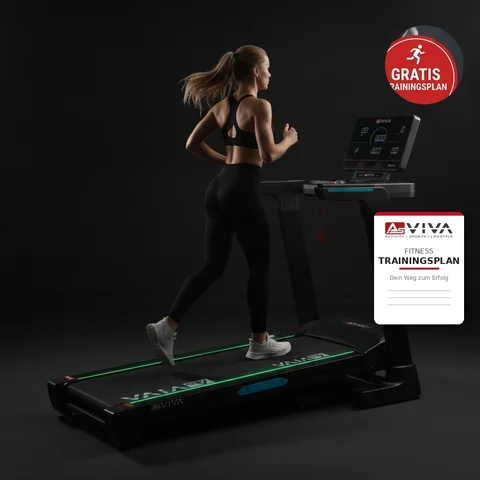
In cardio training, workouts lasting up to 120 minutes are traditionally completed at a constant effort; this includes sports such as cycling, swimming, and running. Beginners should start with short sessions of a maximum of ten minutes and slowly increase them to prevent overexertion. An important factor is the so-called maximum heart rate, which must not be exceeded for optimal training. The calculation is based on the formula: [220 minus your age]. Anyone who wants to play it completely safe trains at a maximum of 85% of their maximum heart rate. A variation of classic training is interval training: here, short, very intense workout sessions are followed by intervals of moderate effort. In practice, this means, for example, a repeating sequence of sprinting and walking. Since this type of fitness training demands a lot from the body, only people who are already physically active should engage in it. Cardio training can be performed either outdoors or indoors. Thus, jogging in nature can be replaced by a treadmill (see: /fitnessgeraete/ausdauertraining/laufband/), and instead of bike rides, one can use a stationary indoor cycle. Equipment that supports a full-body workout is also enjoying growing popularity; elliptical trainers and cross trainers not only promote coordination, but also engage a variety of muscle groups simultaneously (see: /fitnessgeraete/ausdauertraining/ellipsentrainer/, /fitnessgeraete/ausdauertraining/crosstrainer/).
Special case: ergometer
Unlike conventional exercise bikes, ergometers feature a computer that can record and document your workout progress. Personal performance can thus be tracked more easily, which is particularly important during cardio training. In most cases, ergometers are offered as exercise bikes, but cross trainers and rowing ergometers are also enjoying growing popularity.
Strength training
Strength training can also contribute to maintaining heart health. By using specialized equipment or weights, individual muscle groups are targeted specifically. This type of sport takes place mainly indoors and specifically targets certain parts of the body. Weight benches are ideal for strengthening the chest and arm area (see: /fitnessgeraete/muskeltraining/hantelbank/), while ab and back trainers tackle visceral fat (see: /fitnessgeraete/muskeltraining/bauchtrainer-rueckentrainer/). In addition, they are excellent for strengthening the back muscles, relieving back pain, and counteracting poor posture.
Reduce risk factors, move more, and pay attention to diet
Together with strokes, heart attacks are among the most common causes of death worldwide; in industrialized countries, almost every second death can be attributed to them. A variety of factors are responsible, though some risks can be actively counteracted. Lack of exercise, severe obesity, stress, and smoking are among the most important modifiable factors in the fight against heart attacks. Health-oriented exercise and controlled weight loss to reach your personal optimal weight are essential to reduce the risk of premature cardiac death. Cardio training in particular has proven beneficial to health; however, to avoid overexertion, untrained individuals should start with short sessions and gradually increase the intensity to avoid putting additional strain on the body. Targeted strength training can also help strengthen the body, increase overall performance, and thus contribute to heart health.
Ensure more exercise with AsVIVA fitness equipment:
Cross Trainer & Ergometer AsVIVA C28 Pro Wi-Fi
✓ Cross trainer & ergometer function
✓ USB port with charging function
✓ 16 workout programs
✓ Integrated hand pulse sensors
✓ Transport wheels (Take-to-Carry System)
more details
Treadmill AsVIVA T23 Pro Climb Treadmill
✓ 6-fold Cushion Flex cushioning
✓ Climb mode with incline up to 40%
✓ Run mode with incline up to 15%
✓ Integrated hand pulse sensors
✓ Energy-efficient 7.0 HP electric motor
more details