Three minutes brisk, three minutes easy, five times in a row: that is all there is to Japanese walking. The method was named the most searched fitness trend at the end of 2025, but it is not a social media invention. It was developed almost twenty years ago at a Japanese university and has since been tested on thousands of people. Here you can read what is behind it and how to do it outdoors or at home on a treadmill.
What is Japanese walking?
The technical name is Interval Walking Training, IWT for short. It was developed by the exercise physiologists Hiroshi Nose and Shizue Masuki at Shinshu University in Matsumoto. Their aim was a workout that older people can keep up without a gym, without a coach and without much time.
The routine is simple:
- 3 minutes of brisk walking: fast enough that you can still talk, but no longer sing
- 3 minutes of easy walking: a relaxed strolling pace
- repeat five times: 30 minutes in total
- at least four times a week
What the study showed
The first study was published in 2007 in the journal Mayo Clinic Proceedings. Around 250 adults with an average age of about 63 were split into three groups for five months: no training, steady walking at a moderate pace, and interval walking.
In the interval group, endurance and leg strength rose much more than with steady walking, and blood pressure fell as well. Later analyses by the research group with several thousand participants came to similar results. The key is the change of pace: the brisk sections challenge the heart and muscles more, while the easy phases make it manageable for almost everyone.
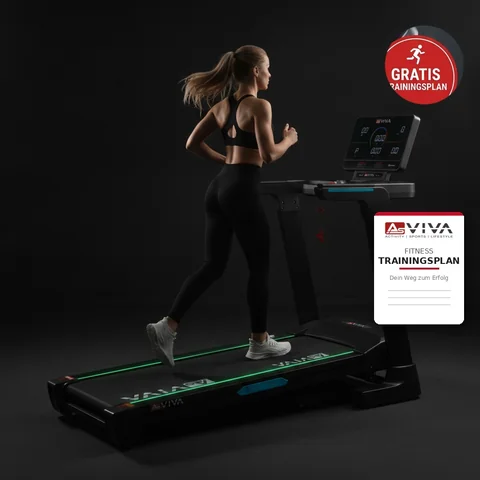
How to do Japanese walking on a treadmill
Outdoors you have to hold your pace by feel. On a treadmill you set it exactly, and weather and darkness do not matter. Especially in winter, this is the easiest way to stick with it.
| Section | Duration | Treadmill guide value |
| Warm-up | 3 min | easy, about 3 to 4 km/h |
| brisk | 3 min | about 5.5 to 6.5 km/h, without running |
| easy | 3 min | about 3.5 to 4.5 km/h |
| Repeat | 5 rounds | 30 minutes in total |
These values are only a guide. Your own feeling matters more: in the brisk phase you breathe noticeably faster and can only speak in short sentences. In the easy phase you recover enough for the next brisk round to work again.
Three tips for the treadmill
- Use the quick keys: if your treadmill has fixed speed keys, set the two speeds once and then switch with a single press.
- Incline instead of speed: if you do not want to walk faster, do the brisk phase with a little incline. It is more demanding without you starting to run.
- Do not hold on: leaning on the handrail takes part of the effort away.
Who is Japanese walking suitable for?
The method was developed for people from middle age onwards, for beginners and for anyone who finds running too hard on the joints. Because you never run, the impact stays low. If you already jog regularly, you can use it as an easy session between harder training days.
If you have pre-existing conditions, for example of the heart, circulation or joints, talk to your doctor before you start.
Treadmill or walking pad?
For Japanese walking, any device that reaches a brisk walking pace will do. A walking pad fits under a desk and is designed for walking. A treadmill offers more speed, usually incline and a larger running surface. You will find the detailed comparison in the article Treadmill or walking pad?. If you later want to move from walking to running, the right plan is in the article Running plan for beginners.