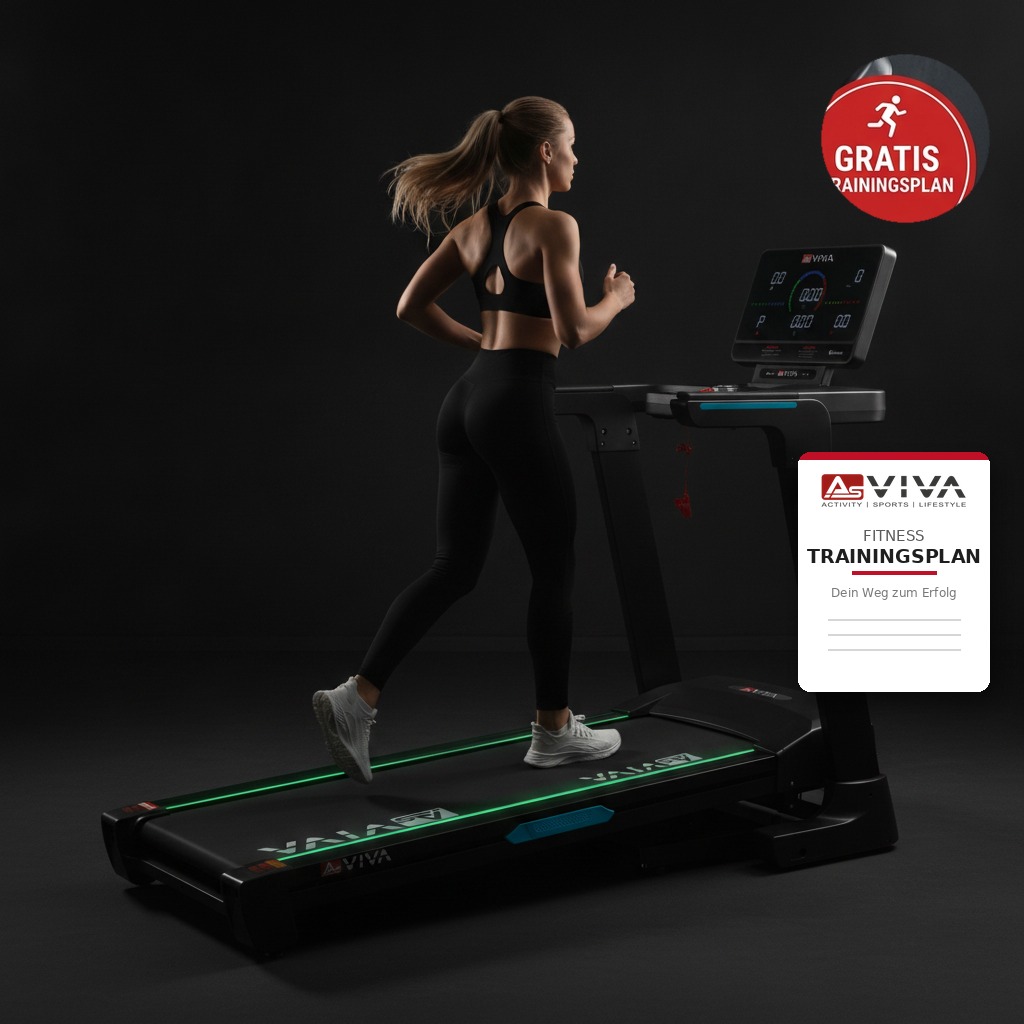
How does cardio training work?
Cardio actually means nothing other than endurance training. It refers to all types of physical activity that exercise your cardiovascular system and improve your breathing. During cardio training, large muscle groups move so steadily that cardiovascular output accelerates and your lungs are trained to absorb more oxygen, becoming more efficient. You can perform cardio training with or without equipment to systematically boost your endurance.
Which sports are suitable for cardio training?
There is a wide variety of sports that are great for cardio training. Here is a brief list of the most popular activities:
- Jogging (outdoors in nature or on the treadmill at home or in the gym)
- Cycling (outdoors on a bicycle or on a bike ergometer)
- Rowing
- Cross trainers
- Swimming
- Cross-country skiing
- Classes and sports that generally get you sweating
What does cardio training do?
Simply put, your cardiovascular system and lungs are constantly conditioned, becoming more and more efficient over the course of your cardio training. You'll notice this not only when climbing four flights of stairs to your apartment with three grocery bags on your arms, but in many other areas of your life as well. You become more capable, and your body can perform better. Your endurance increases. Stress reduction is another positive effect of cardio training. By strengthening your cardiovascular system, you also boost your immune system and become more resistant to metabolic diseases. Muscles are strengthened because increased blood flow supplies muscle tissue with vital nutrients. Your breathing and lung volume improve: regular endurance training leads to more efficient respiration. Overall, cardio training brings a whole host of benefits. If you have never done cardio training seriously before, it's best to schedule a check-up with your doctor first and discuss your plans with them.
How do you start cardio training?
The golden rule is probably: Never start cardio training at full throttle! Instead, ease into it slowly. Get your body used to the new strain. Stick with it, train regularly, and gradually increase the intensity, duration, and workload. Too much or too high a training volume increases the risk of injury. So listen to your body and ideally create a plan with an experienced trainer you trust. Also, give your body enough time to recover and regenerate. Later on, HIIT or HIT sessions can supplement your workout. If you are significantly overweight, it's better to start with a very joint-friendly activity like swimming or cycling.
Is cardio training suitable for weight loss?
The answer to this question is probably a clear "yes and no". If you approach it correctly and combine it sensibly with the right strength training, cardio can be immensely beneficial for your weight loss goals. When done right, endurance training supports and accelerates fat loss. In recent years, cardio training has gotten a bit of a bad rap.
As is so often the case, the truth likely lies somewhere in the middle: if you have your diet under control and complement your strength training with moderate endurance sessions, the latter will almost certainly be a helpful boost if you want to lose weight.
If your goal is fat loss, you should start with strength training first and tack on a light cardio session afterward. Ideally, do this in the morning on an empty stomach—that way, your body, having emptied its carbohydrate stores overnight, can tap into fat reserves as an energy source for your workout.
Just experiment to see which sequence works best for you. It also depends somewhat on your goals: if your objective is simply to improve your endurance and overall performance, you're likely better off doing your cardio session first rather than expending a significant portion of your energy on strength training. As mentioned, it largely depends on what you're striving for.
The most promising path is likely a strict meal plan combined with well-designed strength training; endurance training is merely a third extra component for those looking to lose weight.
Workout duration and intensity in cardio training
Some might say: "The longer I work out, the more calories I burn." While that may be true, the motto "more is better" doesn't always apply here. On the one hand, the longer your cardio session lasts, the higher the risk of injury. You get tired and might pay less attention to proper form. On the other hand, training intensity plays a role as well. A crisp HIIT session (High Intensity Interval Training) of around 20 minutes can be just as effective as a moderate-intensity endurance session that lasts twice as long.
Also ask yourself: "How much time can and do I want to invest in my endurance training each week?" If your life is generally packed (demanding job, busy schedule, family, etc.), you might be better served by a quick, intense cardio session like Tabata or HIIT rather than a long, low-intensity endurance session. However, especially for cardio beginners, it's a good idea to invest a bit more time at first and start slowly to moderately rather than going full throttle right away. Give your body some time to adapt to the new workload before gradually increasing the intensity of your endurance workouts. A good benchmark frequency is 3 times a week for about 30 minutes. Depending on the sport, of course. Getting started, especially with jogging, can look quite different.
Conclusion on cardio training
Cardio training is great if you want to increase your endurance and strengthen your cardiovascular system. Start slowly and only then increase your intensity. Choose your sport based on preferences or feasibility—cycling or swimming are certainly the gentlest on your joints. Stay on track and work out regularly according to a plan. And if you just want to have fun or de-stress your mind, simply run through the park or forest whenever you feel like it and enjoy the side effect of increased stamina!
The author - Melanie
Melanie is a freelance copywriter & proofreader.
She practices functional fitness and occasionally does a CrossFit session. Favorite exercise: deadlifts.
Otherwise, she enjoys Viniyoga, loves cats, and is a fan of matcha and espresso.
Achieve your goals with AsVIVA:
Treadmill AsVIVA T20 Cardio Pro Runner
✓ Integrated hand pulse sensors
✓ Multifunctional fitness computer
✓ 8-fold multi-layer cushioning
✓ Adjustable incline up to 15%
✓ Energy-efficient 7.0 HP electric motor
✓ Smart folding system
more details
Elliptical trainer and ergometer AsVIVA E4 Pro
✓ Integrated hand pulse sensors
✓12 workout programs
✓ Ergometer function
✓ USB port with charging function
✓ Bluetooth interface
more details