The more or less invisible dangers to our bodies have shifted over the past centuries and decades. What smoking was in the '80s and '90s, for example, is now the lack of exercise in our (Western) society. By and large, we are becoming increasingly sedentary. Since the start of the COVID crisis, with shutdown/lockdown phases popping up time and again, this problem has worsened even further and taken center stage. Doctors and scientists are now warning even more clearly: "Working from home exacerbates our lack of exercise in industrialized countries even further!" But what can we do? What can you do at home to escape the current endless cycle of workstation, refrigerator, and couch? Below, we provide you with some advice on how to structure your day more actively to get moving again.
A sedentary lifestyle is the new smoking
The scientists aren't wrong with this warning. We Germans are well on our way to becoming world-class sitters. According to a 2018 study by DKV, this downward trend continues to grow. The WHO recommends 150 minutes of moderate activity or 75 minutes of intense activity per week. Which, if you look closely, really isn't that much. In 2010, according to the DKV study, around 60 percent of all respondents met this benchmark. By 2018, only 43 percent of respondents reported getting sufficient exercise. The work-from-home situation during the current pandemic certainly isn't helping to bring those numbers back up. Which is alarming.
What risks come with prolonged lack of exercise?
Unfortunately, the human body faces a series of direct and indirect illnesses when it goes far too long without enough movement:
-
Loss of muscle mass, especially core stabilizer muscles. Consequences: Muscular imbalances, tension, muscle pain, spinal wear and tear, etc.
-
Increased sitting or a lack of physical activity lowers the body's basal metabolic rate. Consequences: Weight gain along with all the well-known negative side effects (increased risk of cancer, increased risk of diabetes, increased risk of cardiovascular diseases such as high blood pressure, cardiac arrhythmias, heart attack, etc.)
-
Stress hormones are harder to break down as a result of a lack of exercise. Happy hormones otherwise triggered by physical activity are missing instead. Consequence: Weight gain. People then unfortunately resort to "substitute triggers" like sweets, which also release happy hormones.
How can I get moving more while working from home?
There are a few tips and tricks that might help you outsmart your inner couch potato and get moving more at home:
-
Fixed appointments: Pick a fixed time every day when you want to move. This could be an active lunch break in the form of a brisk walk around the block, a yoga session to stretch on your exercise mat, or a Zoom session with workout buddies to exercise together. The important thing is that you schedule this appointment bindingly in your calendar. Make it as hard as possible to find excuses!
-
Schedule online workouts into your daily routine: Does your gym, functional box, or personal trainer offer online workouts? Fabulous, join in! The scheduled times will create a sense of commitment, making last-minute cancellations much harder. As one of my trainers always jokes when explaining the deadlift: "Take whatever you have available at home: a crate of water, a kettlebell, a child, a small cabinet..."
-
Put your exercise plans in writing: Things you write down somewhere are somehow more binding for your mind than if you just "plan to do it" in your head. Get specific. The more specific, the better. Don't write down "I go jogging three times a week", but state it more precisely: "I go jogging every Monday, Wednesday, and Friday at 18.30 for 60 minutes." Sounds completely different, doesn't it? And if you now stick the note on the fridge and ask your partner or best friend to lovingly remind you of it, you are more likely to carry out your plan than if it is a vague promise to yourself. Even better is making an appointment to go jogging with a workout buddy.
Under-desk treadmill: Combine work with movement!
Have you ever noticed that there are always a few colleagues who, even in the office, always took customer calls standing up or walking around? There's a reason for that: Movement, in this case strolling through the office, has a brain-stimulating effect. Additionally, the brain gets more oxygen, making it easier to think. So if you didn't already have a good Bluetooth headset, get your employer to fund one or invest in one yourself. It's money well spent, giving you more freedom of movement in every sense. An ergonomic chair or a standing stool also adds variety. Changing your seating position or alternating between sitting and standing while working takes the pressure off your spine.
Were you planning to expand your home gym equipment anyway? Then right now would be the absolute best time to supplement your home work corner with an item that brings movement into your work: an under-desk treadmill!
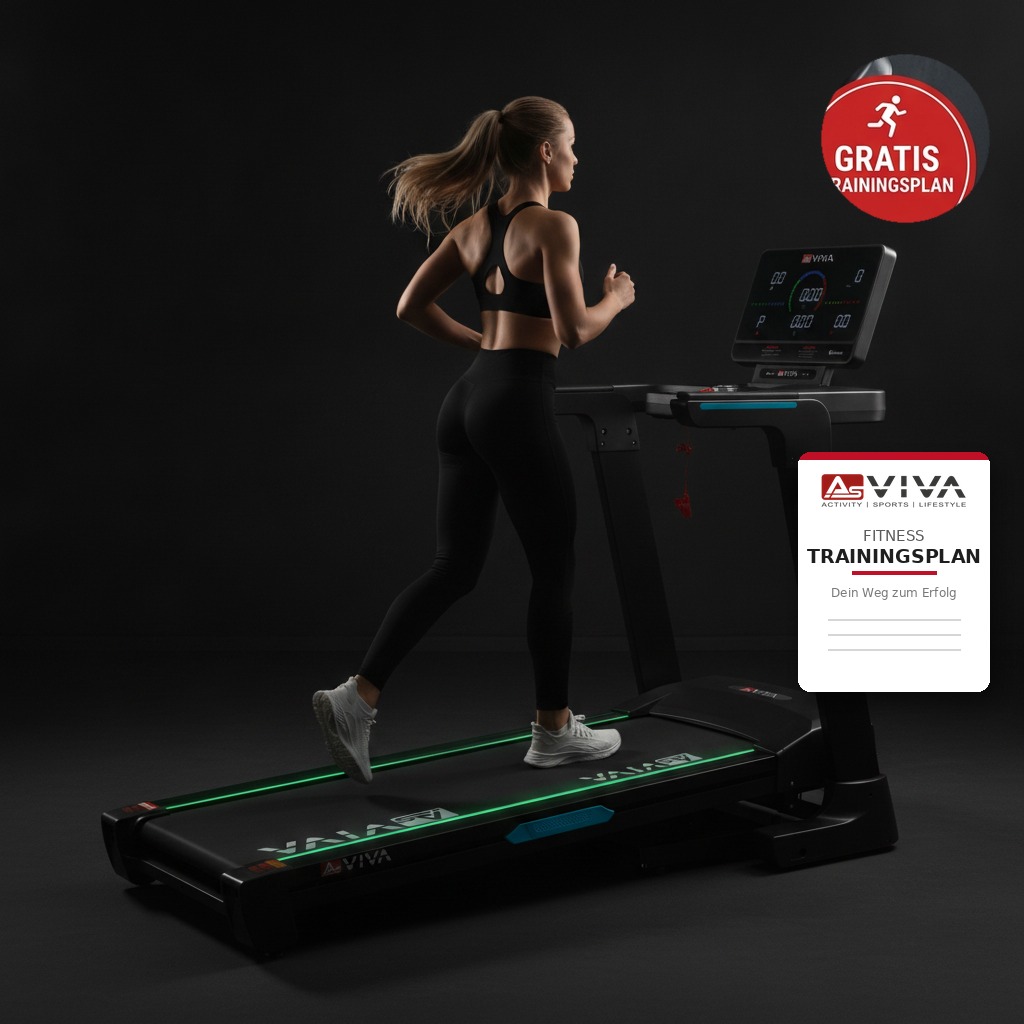
Treadmills nowadays are so much more than they were 15 or 20 years ago. They feature small, exceptionally versatile, adjustable computers, can be paired with audio systems or TVs, and so on. An under-desk treadmill is usually designed to be quite compact, yet includes all the advantages and features of a "normal" treadmill. The handrails can either be folded down or removed completely, allowing the device to be conveniently positioned in front of or under the desk. The AsVIVA treadmill models T24 and T25 are examples of such devices, allowing you to comfortably squeeze in a short walk or run at your computer. Why not read your emails on the computer at a moderate or brisk walking pace every morning? That way, you easily get back within reach of a 10,000-step daily goal. Simply incorporate a treadmill into your workday routine; phone calls or brainwork in particular pair well with a brief exercise session on the under-desk treadmill.
Just get moving again at home – I'm heading off to do a quick workout now, too!