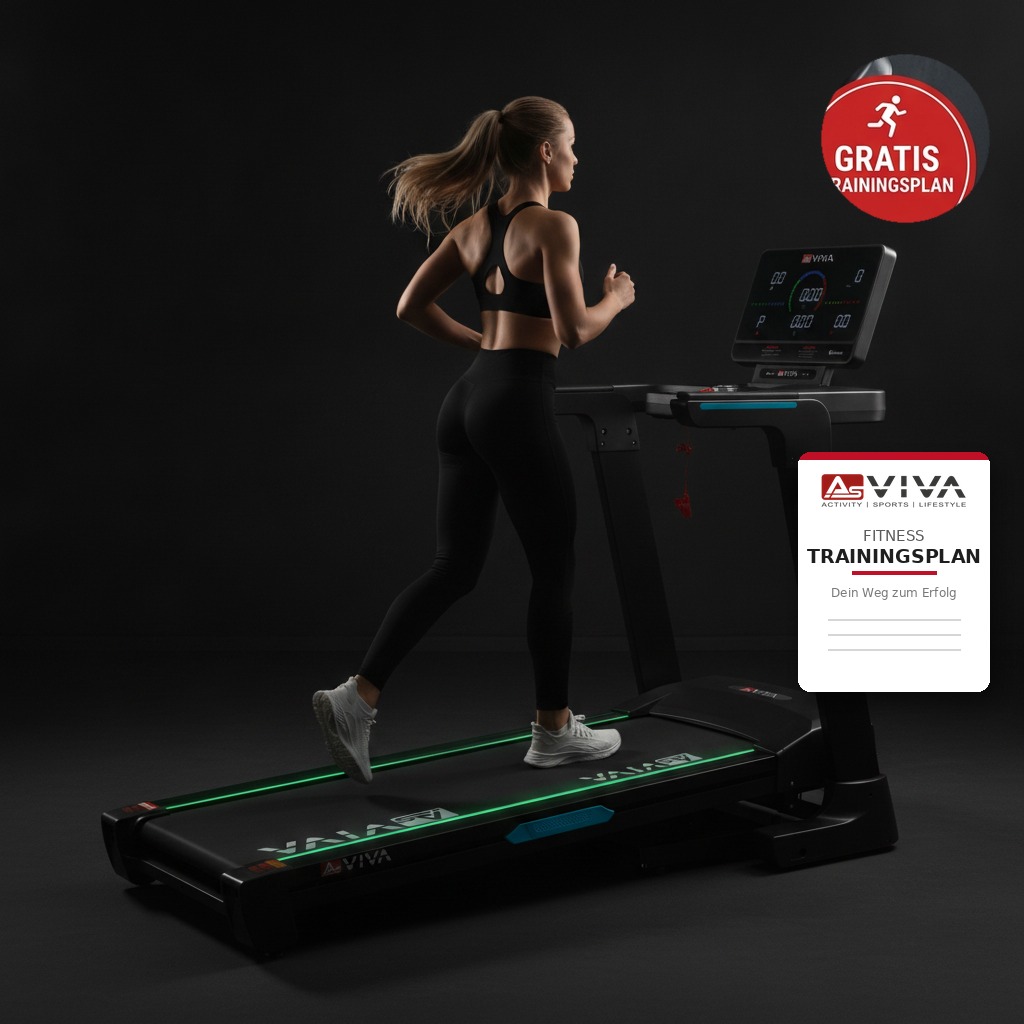
Treadmill, cross trainer, or walking pad – which piece of fitness equipment is the best choice for your home gym? We show you the differences, pros, and cons to help you make your decision.
Why endurance training at home makes sense
Endurance training is one of the most effective methods to improve fitness, strengthen the cardiovascular system, and support fat burning. Equipment such as the treadmill, the cross trainer, or modern walking pads are the most popular exercise devices in home gyms for this purpose.
The treadmill – the classic for jogging at home
For runners and joggers, the treadmill is often the top choice. It simulates natural running and allows flexible workouts regardless of the weather or season. Anyone choosing a treadmill should pay attention to quality: good cushioning, robust technology, and sufficient space are essential.
Pros and cons of the treadmill
| Treadmill advantages | Treadmill disadvantages |
| Natural running feel – ideal for joggers and marathon preparation. | Higher joint stress compared to the cross trainer. |
| Versatile use: walking, jogging, sprinting, or as a walking pad at the workstation. | Monotony possible despite various running programs. |
| Indoor workouts possible in any weather. | Space requirements and purchase costs are often higher. |
| Many models are foldable and can be stowed away to save space. | Some models take getting used to for beginners. |
The cross trainer – low-impact full-body workout
The cross trainer and the elliptical trainer train almost the entire body. By combining arm and leg movements, you engage up to 90% of your muscles. At the same time, cross trainers are very gentle on the joints and therefore ideal for beginners or people with knee problems.
Pros and cons of the cross trainer
| Cross trainer advantages | Cross trainer disadvantages |
| Full-body workout with up to 90% muscle activation. | Movement feels unnatural compared to jogging. |
| Very easy on the joints thanks to fluid movements. | Lower energy consumption if core tension is lacking. |
| Versatile: forward, backward, and with arm movement for higher calorie burn. | Guided movements may require less active engagement. |
| Easy and safe to use for beginners. |
Walking pads – the space-saving alternative
Walking pads are becoming increasingly popular. They are more compact than classic treadmills and can be perfectly integrated into everyday life – for example, as an under-desk treadmill in the home office or as space-saving fitness equipment for smaller apartments.
Conclusion: Treadmill, cross trainer, or walking pad?
There is no clear winner – the choice depends on your goals and preferences. Treadmills are especially suitable for runners and anyone who wants a natural running feel. Cross trainers offer joint-friendly full-body workouts and target many muscle groups. Walking pads are ideal for space-saving workouts in everyday life.
Tip: Try out both options during a test workout and decide which machine keeps you motivated long-term and fits your lifestyle.
FAQ: Frequently asked questions about cross trainers and treadmills
Which burns more calories, a cross trainer or a treadmill?
At the same level of effort, the treadmill comes out ahead because body weight is supported with every step. The cross trainer catches up somewhat because the arms and core are actively working. The difference is smaller than often claimed – what matters most is which machine you use regularly.
Which puts less stress on the joints?
The cross trainer, clearly. The foot never leaves the pedal, so there is no impact. On a treadmill, two to three times your body weight acts on your joints with every step – this can be reduced by walking instead of running and by using an incline, but it cannot be avoided completely.
Which machine takes up less space?
In terms of footprint, the cross trainer (109 to 172 cm long); in terms of height, the treadmill. Cross trainers stand 162 to 179 cm tall, plus your standing height on the pedals – this can get tight in rooms with sloping ceilings. On the other hand, six of our twelve treadmills are foldable, while none of our cross trainers are.
Can I train on a cross trainer for a run?
For endurance, yes; for the running movement, no. Cardiovascular fitness benefits regardless of the machine. However, the stress on tendons, ligaments, and bones during running is only practiced by running itself.
Which is quieter?
The cross trainer. It has no motor and no impact – all that remains is the whirring of the flywheel. For our treadmill Studio Pro T22, we measured 48 to 53 dB; on top of that comes the footfall, which transfers through the frame into the ceiling below.
Which is the better choice for overweight individuals?
The cross trainer, because the joints do not experience any impact. If you prefer a treadmill, choose incline over speed: brisk walking at 6 to 12% challenges the cardiovascular system similarly to light jogging, completely without impact.