Some people love endurance training – others hate it and consider it monotonous and boring. But endurance sports are a great thing for body and mind. In this article, we explain why you should really consider starting endurance training. This doesn't necessarily mean you have to work toward running a marathon. First and foremost, you should enjoy it. So find an endurance sport that suits you, that you want to do long-term, and that you can get on board with.
Why endurance training is good for you – 10 reasons
Why exactly is endurance training so good for your body and your mind?
Here are 10 reasons why endurance sports have a positive impact on you:
- It strengthens your cardiovascular system. Gentle or challenging endurance sessions prompt your heart muscle to be more active, your breathing increases, and with it, oxygen transport through the bloodstream. Blood circulation in all cells improves, supplying your body with more nutrients and essential building blocks. The risk of a heart attack is reduced.
- Endurance is the foundation for any other athletic performance. Anyone who wants to engage in sports needs a certain baseline endurance. Start slowly, don't overexert yourself, but feel free to challenge your body a little. A bit more each time—that's how you build your endurance slowly but steadily.
- It improves your cholesterol levels. 'Bad' LDL cholesterol drops while 'good' HDL cholesterol increases over the course of your endurance training. Consequently, the risks of a serious heart condition are lowered.
- Your resting heart rate decreases. Through continuous endurance training, you recover faster after a workout, and your recovery time improves. Your heart rate drops more quickly, and your resting heart rate becomes lower over time. So you're doing your heart a favor and taking a lot of work off its shoulders over months or years. What's more, you will slowly but surely build up your stamina. That's truly motivating!
- Endurance training has a positive effect on your immune system. Immune cells responsible for defense are strengthened and produced in greater numbers, helping you protect yourself better against infections.
- You can concentrate better. Thanks to improved oxygen uptake, blood circulation to the brain is enhanced as well. Your ability to focus increases.
- Endurance training also impacts your mental state: Due to the increased release of the happiness hormone serotonin, you feel generally better and happier after exercising.
- Stress is reduced: Endurance training breaks down stress hormones, calms you down, and helps you achieve greater relaxation and composure.
- Cardio training can also lead to increased fat loss—causing those extra pounds to melt away.
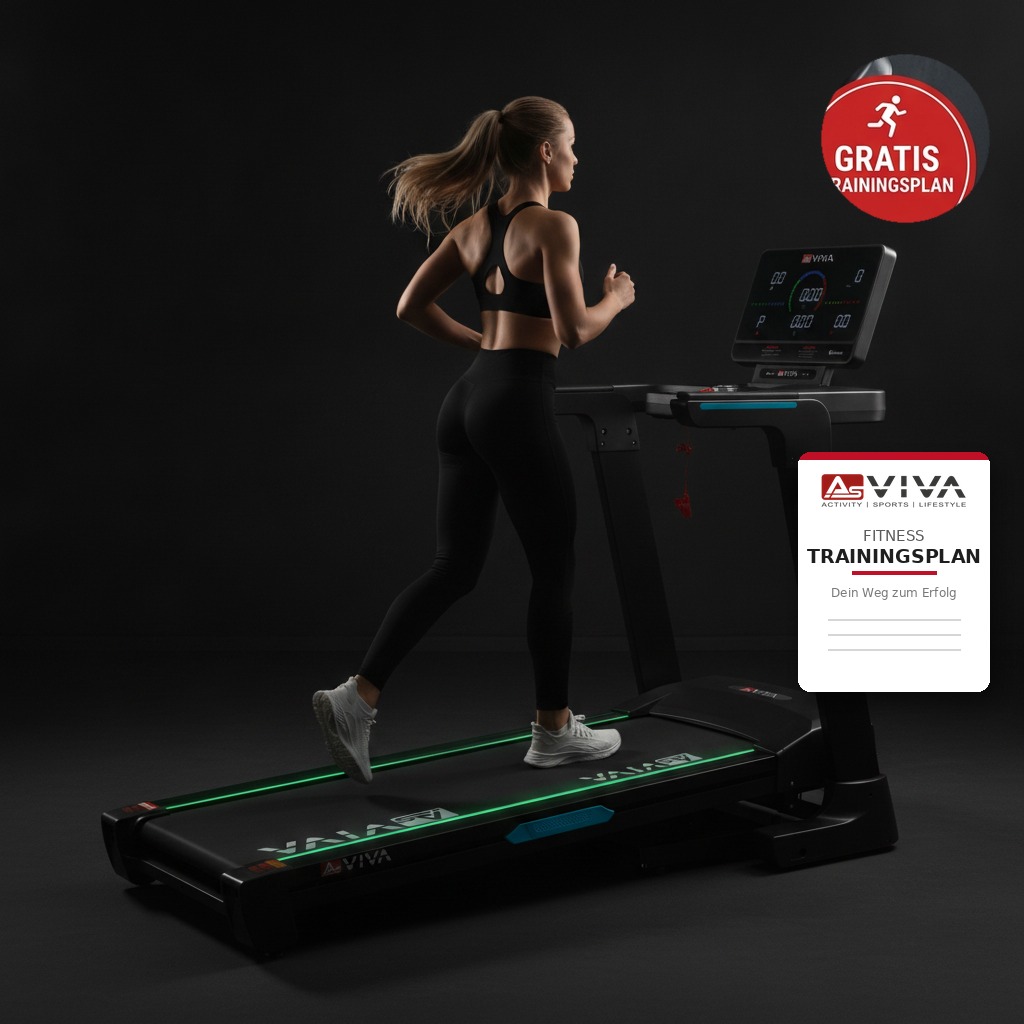
- Endurance training is not limited to the summer months. In winter, you can simply bring your cardio workout home: A treadmill in a spare corner or a rowing machine will get you sweating even during the cooler time of year, helping you stay on track toward your training goal.
And anyone who still thinks, "Oh, that's not for me, you usually just go jogging anyway," is mistaken. Endurance training can be truly versatile, and you can do it in various ways. Even brisk cycling, walking, or power walking in the woods counts.
What types of endurance sports are there?
Today, we're going to present a few of the most popular types of endurance training. Depending on your fitness level, there's something for everyone—from the beginner who wants to get started to someone who already brings a certain baseline endurance.
- Jogging – the classic. Whether beginner or advanced, virtually anyone can learn and practice jogging. However, if you are carrying around a lot of extra pounds, it might not be the ideal sport to start your endurance training. Jogging places a tremendous amount of strain on the knees, hips, and ankle joints of overweight individuals. An alternative would be better at first.
- Nordic walking – ideal for beginners. Power walking in a group with like-minded people under the guidance of a trainer will quickly boost your endurance level. Plus, it doesn't put as much strain on your joints as jogging does.
- Swimming – perfect for anyone carrying a few extra pounds. The water supports most of your body weight, protecting your joints so you can focus fully on your endurance training. On top of that, it works your entire body, especially your back.
- Cycling – a great way to build endurance, both indoors and outdoors. Whether in an indoor cycling class at the gym or alone or with fellow cyclists in the great outdoors: cycling is easily adaptable to your individual fitness level.
What types of endurance training are there?
Cardio training doesn't always have to be the same. There are different types of workouts that keep things varied and challenging:
- Continuous method: Here, you train over an extended period at a steady pace. Jogging is the prime example. Or steady cycling or swimming. This method is ideal for building up basic endurance. Beginners slowly work their way up to longer time periods, steadily increasing muscular endurance and lung capacity.
- Interval training or HIIT (High-Intensity Interval Training): Workouts are structured in cycles. A short period of high-intensity exercises is followed by a rest, after which the workout cycle is repeated. Usually, there are several rounds. This is an exceptionally effective workout that requires a massive amount of energy during the active phase, burning more fat than continuous steady-state training. However, it makes sense to build a certain foundation of endurance first rather than jumping straight into interval training as an untrained beginner.
Endurance training and strength training – an ideal mix
It is recommended to consistently stick to your endurance training and alternate it with a strength workout. Don't overdo it, and allow sufficient rest and recovery time for your body; a maximum of three sessions per week is completely sufficient to steadily build endurance. The most important thing is simply doing it regularly, and success will follow almost automatically.
The author - Melanie
Melanie is a freelance copywriter & proofreader.
She practices functional fitness and occasionally does a CrossFit session. Favorite exercise: deadlifts.
Otherwise, she enjoys Viniyoga, loves cats, and is a fan of matcha and espresso.
Recommended fitness equipment for daily physical balance:
Recumbent Ergometer AsVIVA R7 Bluetooth Recumbent Bike
✓ Ergometer function
✓ App compatible with Bluetooth
✓ 24 resistance levels
✓ 16 workout programs
✓ Includes Polar chest strap
more details
Stepper & Ergometer AsVIVA ST4 Bluetooth
✓ Integrated pulse receiver
✓ 23kg flywheel mass
✓ 16 computer-controlled programs
✓ Electronic resistance adjustment
✓ Permanent magnet resistance
more details