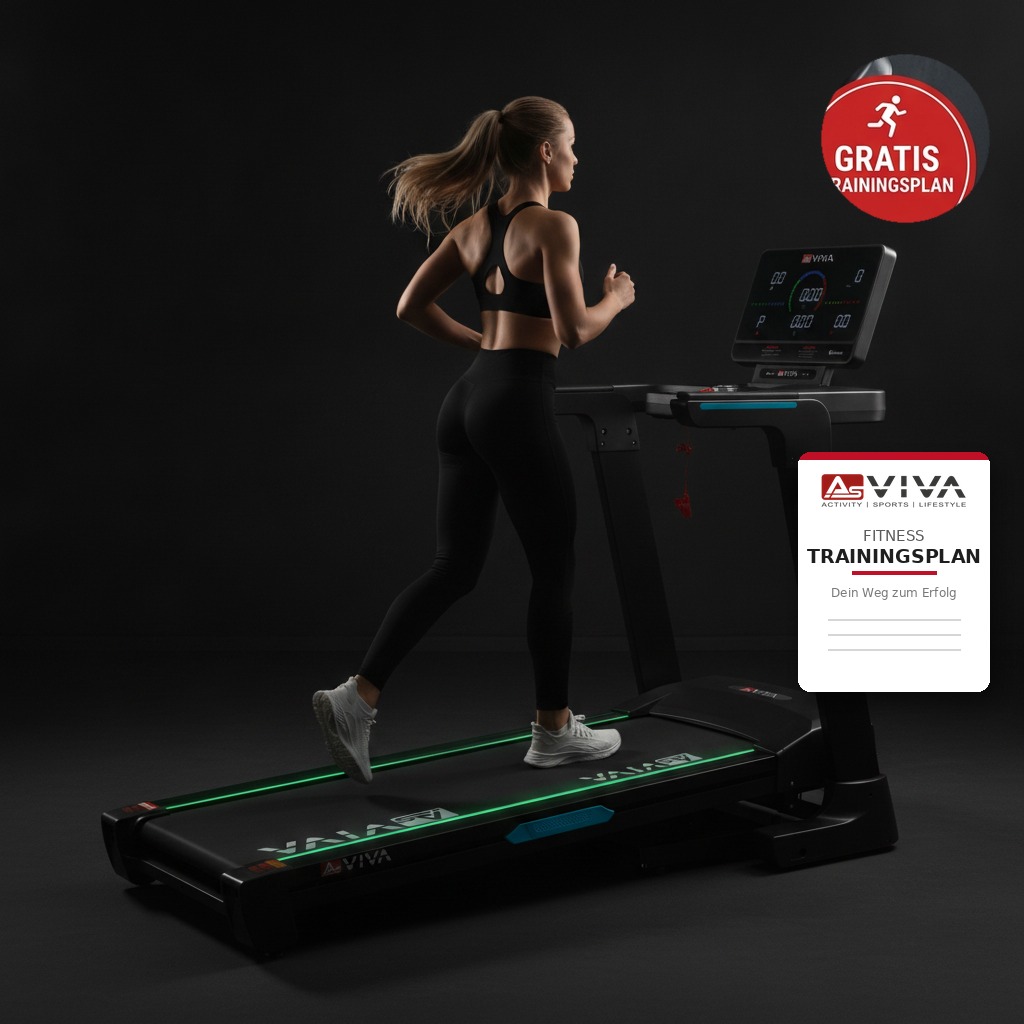
Avoid overtraining – take care of yourself and your body!
We have already talked in Part 1 on the topic of overtraining about what exactly overtraining is and which typical symptoms allow you to recognize overtraining. Today, we want to focus on how best to prevent reaching a state of overtraining in the first place. Instead, ideally before or at the start, you register the subtle signs from your body, identify them as warning signs, and act accordingly.
Recognizing warning signs of overtraining
First, let's briefly summarize the warning signs your body uses to signal that you are on your way to overtraining. Because the phrase "more is better" rarely applies to overambitious amateur athletes. In the best-case scenario, you have a well-structured training plan that, above all, schedules recovery time for your body. After all, your muscles desperately need these recovery phases following new training stimuli to rebuild. In principle, muscle growth happens precisely during these rest periods. But it's easy to fall into a kind of training craze. And as soon as we stop sticking to the training cycle and no longer allow our body sufficient recovery phases for muscles to rebuild, the body gradually slips into a state of overtraining. Signs of this can include one or more of the following symptoms:
-
Drop in performance despite constant or even increasing workload
-
Persistent fatigue, lack of motivation up to depressive moods, or the complete opposite
-
Irritability, high resting heart rate, and insomnia
-
Very long-lasting, severe muscle soreness
-
Increased susceptibility to infections
So what should I do to avoid overtraining?
This is where the infamous phrase “less is more” comes into play. Meaning: Always schedule rest days into your weekly training plan! Don't worry, your muscles won't break down during this time—on the contrary. During this time, you give your muscles the desperately needed rest to recover from the previous intensive workout and to grow.
This means rest periods in your training are at least as important as the workout itself!
Rule of thumb: Train cyclically. An intense workout day is followed by a rest day or a day with very low strain. It's enough to go for a bike ride, go swimming, relax your muscles with heat in the sauna, or support recovery with a bit of fascia training using a roller or ball.
Treat yourself to a real training break once or even several times a year! That means actually doing zero sports for one to two weeks or even more. It might feel very hard at first, but you'll see that you return to your workouts with fresh motivation afterward! That doesn't mean you shouldn't move at all. Going for a walk, enjoying a relaxed bike ride, and similar recovery-focused activities are still totally fine.
What to do if I am overtraining?
If you notice from the symptoms above that something is wrong, you should stop your brain from having the sudden thought that things will surely get better if you train EVEN harder. Stop – that is almost certainly the wrong measure. Especially at the first warning signs, it makes much more sense to simply give your body one or more extra days off by prescribing yourself a break from training. Get plenty of sleep, and continue to eat a healthy, balanced diet. In most cases, these few additional recovery days are enough to give your body the necessary time to regenerate.
It becomes more difficult if you ignore these subtle initial signals and simply carry on or even increase your workload. Then you slip into full-blown overtraining. And in most cases, that means a forced break of several weeks or even a few months. Because the longer you ignore the overtraining signals and get into deep, pronounced overtraining, the longer the convalescence phase will be afterward. So, in principle, you are only hurting yourself. The smarter option is to hit the brakes right away and give your body the needed time out. It's better not to train for a week than for months.
Therefore, it is all the more important to recognize the initial signs and then act correctly. Taking a short, additional recovery break in good time means that your body can recover well and tackle the upcoming workouts with full power again, instead of slowly but surely maneuvering into complete fatigue, which can only be worked through with difficulty and long breaks from sports.
Further quick tips and tricks for actively counteracting overtraining in good time are:
-
Get enough sleep or, if needed, treat yourself to an extra hour or two of sleep. Your body will thank you once it's well-rested.
-
Review your training regularly: Is it too intense? Do you perhaps have too many training days a week and too few rest days? Are your workouts too long?
-
Take enough time for recovery: A foam roller can help, as can the occasional sauna day with friends to relax both muscles and mind.
-
If you notice that it's doing no good at all and you feel completely exhausted and drained during a workout, then stop. That is tough, but it's a better decision than continuing to train at a lower level.
-
Place high value on good, regular sleep and a balanced diet.
You will see that if you pay enough attention to your body and the small signs indicating that more rest is needed, you can actively avoid overtraining and still achieve your athletic goals.